- Supreme Court Bar President Urges Lawyers to Balance Professional Duty with Social Responsibility
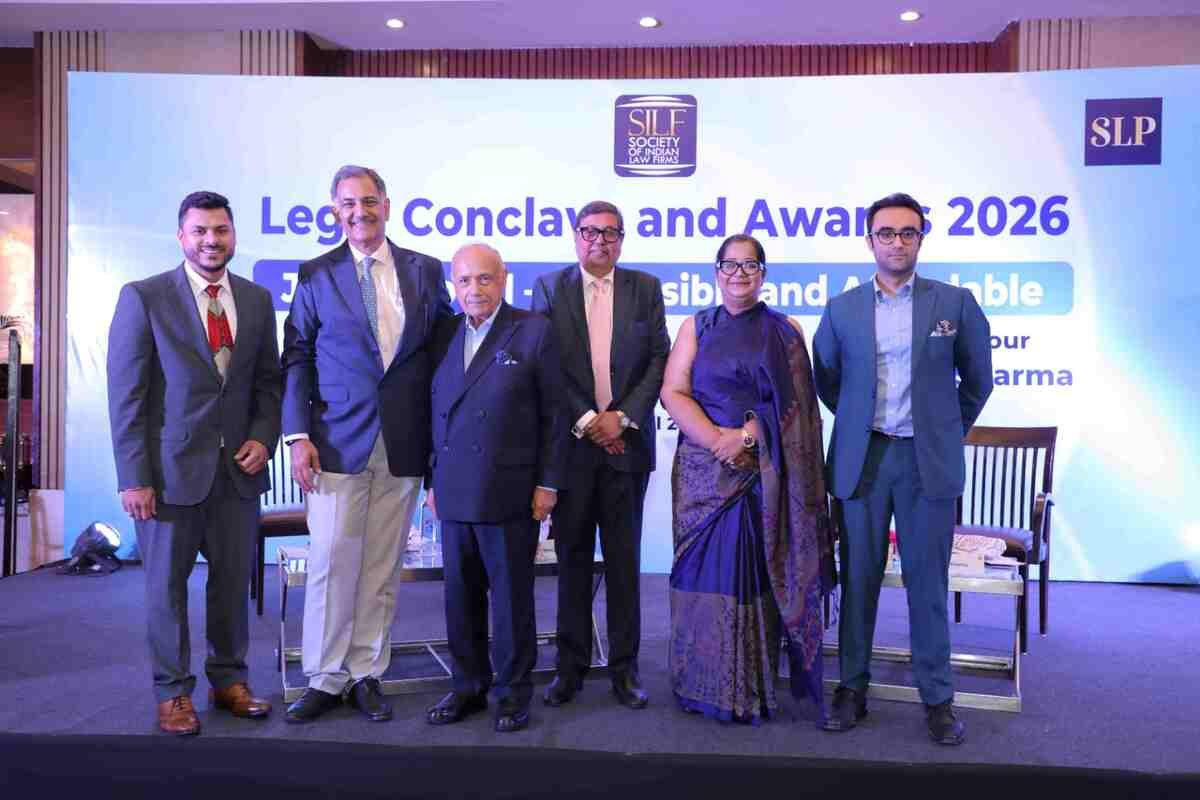
New Delhi, April 20, 2026: Legal experts participating in a panel discussion on “Litigation Vs Arbitration Vs Mediation” during the Legal Conclave and Awards 2026 strongly advocated for reforming the justice delivery system to make it faster, more efficient, and less burdened by excessive appeals and delays. The session was held as part of the conclave organised by SILF (Society of Indian Law Firms) in collaboration with SLP (Society of Legal Professionals) under the theme “Justice to ALL—Accessible and Affordable” in New Delhi.
Ms. Shweta Bharati, Managing Partner, Hammurabi & Solomon Partners, said the appellate, revisional and curative powers of courts are far too wide. She stressed that the first appeal should not become the final court on facts and called for limiting appeals to points of law only. She advocated using AI for preliminary case assessment to decide whether a matter deserves summary hearing, fast-track trial or mediation.
Mr. Amit Kapur, Partner, J. Sagar Associates, pointed out that the government, as the largest litigant, must improve its internal decision-making process. He said it is a commercial decision, not merely a legal one, and unless government officers are empowered to take timely decisions on settlement or compromise, reducing the judicial backlog would remain a difficult task.
Mr. Arush Khanna, Managing Partner, Numen Law, agreed that litigation, arbitration and mediation should be seen as complementary tools. He emphasised that parties must choose the most suitable mechanism depending on the nature of the dispute for faster and more effective resolution.
Mr. Alok Kumar, Managing Partner, THS Law Firms, supported the view that greater focus should be placed on mediation and arbitration to reduce the burden on courts and deliver timely justice to litigants.
In other panel discussion on “Professional Social Responsibility”, delivering his keynote address, Mr. Vikas Singh, President, Supreme Court Bar Association, put emphasis on the dual pillars of professional responsibility service towards law students and commitment to legal aid.
He said, “The two important pillars when I talk about professional responsibility are one towards the law students and the other being legal aid. Both of them are helpful to each other. While I was in law school, we had set up a legal aid society where NGOs would bring women from the lower strata of society who had no access to legal services. By helping them with issues related to employment, maternity, and domestic relationships, we were not only providing legal services but also educating law students. This experience instilled compassion in future lawyers and reinforced that access to justice is a fundamental right under the Constitution.”
Mr. Vikas Singh added that despite the heavy pressures faced by litigating lawyers, every lawyer in the country should contribute meaningfully. He said, “If each lawyer takes up just one pro bono matter and conducts one legal awareness camp in a year, it would be a major contribution to society as a whole.”
In other two panel discussions held during the conclave on the topics “Is Our Present System Delivering Justice To Citizens (Pendency, Cost, Delays)”, and “Impact of AI in Administration of Justice and DPDP Rules”, speakers expressed serious concern over mounting pendency, high costs and delays in the current system. They called for balanced integration of AI while ensuring data privacy and underlined the ethical responsibility of the legal profession to make justice truly inclusive and accessible.
The conclave provided a vibrant platform for constructive dialogue and practical solutions aimed at transforming India’s justice system into one that is efficient, equitable, and future-ready.