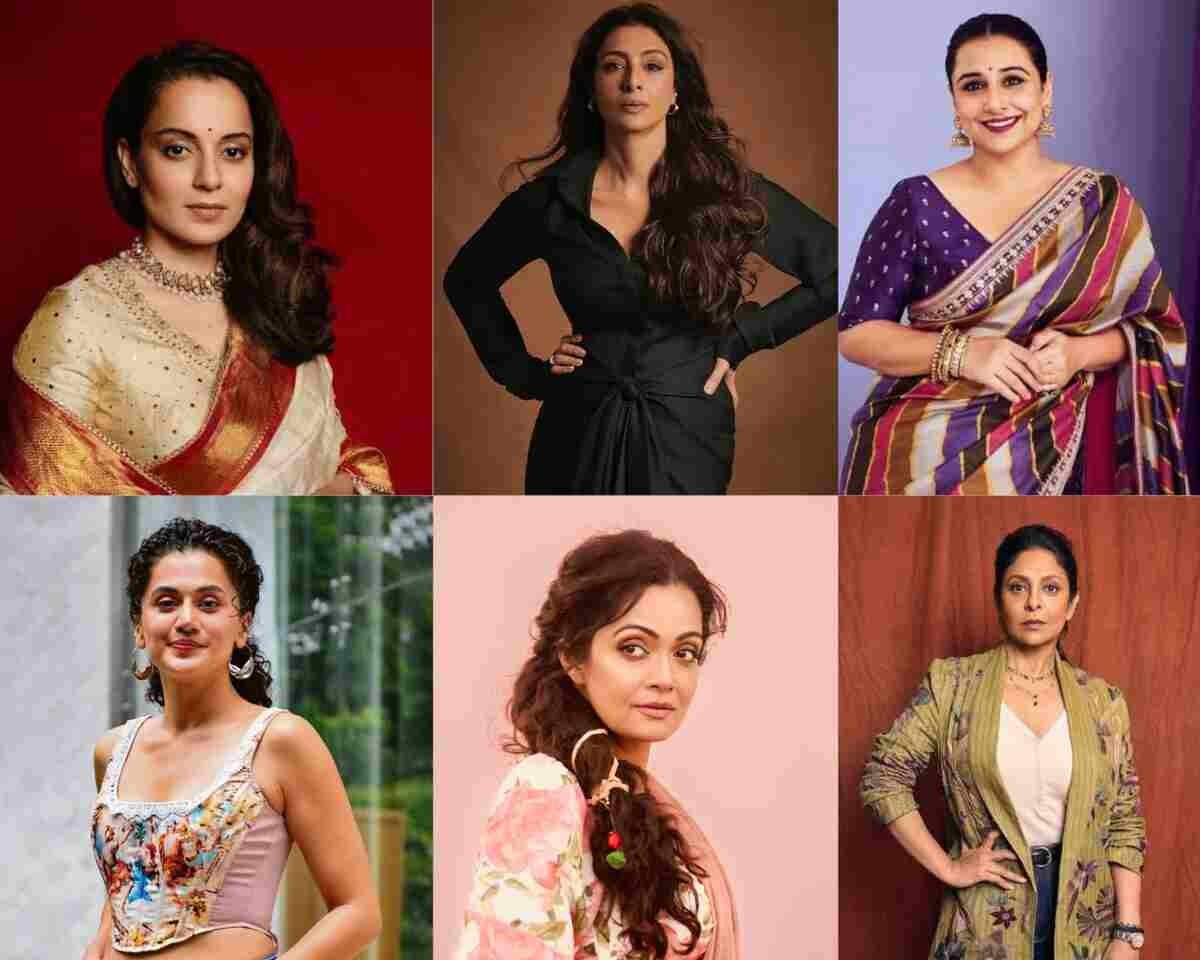
From Kangana Ranaut and Taapsee Pannu to Tabu, Vidya Balan, Sheena Chohan and Shefali Shah, these six Indian actresses are exploring diverse characters and challenging conventional expectations through their screen performances.
In the world of Indian cinema, a successful performance can sometimes become a career-defining label. Once an actress becomes popular for a particular type of character, filmmakers and audiences may expect her to repeat the same formula. However, some performers continue to challenge those expectations by choosing contrasting roles, exploring different genres and embracing characters that take them beyond their established screen identities.
From emotionally layered dramas and gripping thrillers to unconventional protagonists and complex real-life-inspired characters, these actresses demonstrate why versatility remains one of the most valuable qualities in an actor.
Meet six Indian actresses who continue to challenge typecasting and bring fresh dimensions to their craft.
1. Kangana Ranaut: An Actress Who Embraces Bold Choices
Kangana Ranaut has built a career around performances that frequently move beyond conventional Bollywood character types. Her roles have ranged from emotionally complicated personalities to independent women navigating relationships, ambition and personal transformation.
In Fashion, she explored the darker side of the modelling industry through a character dealing with ambition and personal struggles. In Queen, she portrayed a young woman who discovers independence and confidence after an unexpected personal setback. Meanwhile, Tanu Weds Manu and its sequel showcased her ability to portray contrasting personalities within a romantic comedy setting.
These performances highlight her willingness to experiment with different emotional registers and screen personas. Rather than relying on one familiar character template, Kangana has repeatedly explored roles that invite audiences to see another side of her acting.
2. Taapsee Pannu: From Courtroom Drama to Psychological Thrillers
Taapsee Pannu has established a distinct screen identity through films that combine strong characters with challenging narratives. Her choices span courtroom dramas, social commentary, mysteries and psychological thrillers.
In Pink, she was part of a courtroom drama that examined consent and societal attitudes towards women. Thappad placed her at the centre of a story about dignity, marriage and personal boundaries. In contrast, Haseen Dillruba explored a world of romantic obsession, suspicion and crime.
The variety in these projects demonstrates her interest in characters who face difficult decisions and morally complicated situations. By moving between genres and narrative styles, Taapsee continues to challenge the idea that a leading actress must fit a single screen image.
3. Vidya Balan: Challenging Conventional Ideas of a Leading Lady
Vidya Balan has played an important role in expanding the representation of women in mainstream Hindi cinema. Her filmography features characters whose appeal comes from their personalities, motivations and emotional complexity rather than conventional expectations of a leading lady.
In The Dirty Picture, she portrayed a confident and controversial character navigating fame and the entertainment industry. Kahaani presented her as a determined woman searching for answers in a suspenseful mystery. In Tumhari Sulu, she played a middle-class homemaker who discovers a new sense of confidence through an unexpected professional opportunity.
These roles demonstrate her ability to move between drama, suspense and comedy while keeping the character at the centre of the story.
Vidya’s career illustrates how unconventional protagonists can connect with audiences and challenge familiar formulas in Hindi cinema.
4. Tabu: The Art of Becoming a Different Character
Tabu is widely recognised for her ability to bring depth and individuality to characters across a range of genres. Whether appearing in an intense drama, a dark comedy or a suspenseful thriller, she often makes her performances feel distinctive.
In Maqbool, she delivered a layered performance in a crime drama inspired by Shakespeare’s Macbeth. Andhadhun showcased her ability to navigate a story filled with dark humour, deception and unpredictable twists. The Drishyam franchise, meanwhile, placed her in a tense narrative built around investigation, family and unanswered questions.
Her performances stand out for their subtle expressions, emotional restraint and attention to character motivation. Rather than approaching every role in the same way, Tabu adapts her screen presence to the world of each film.
That versatility has helped her remain a compelling performer across different storytelling styles and generations of Indian cinema.
5. Sheena Chohan: Exploring Period Drama and Intense Police Roles
Sheena Chohan is exploring different dimensions of her acting career through roles that contrast in setting, personality and dramatic demands.
Her portrayal of Avali Jijabai in Sant Tukaram placed her within a period-drama setting, requiring a different approach from contemporary characters. She has also taken on the role of IPS officer Anusha in Jhatasya Maranam Dhruvam, marking a move towards an intense police character.
With experience across Malayalam, Bengali and Hindi cinema, Sheena’s work reflects an interest in exploring different regional film industries and screen identities. Moving between historical storytelling and contemporary crime-related narratives offers opportunities to develop contrasting performances.
Her evolving filmography adds another perspective to the conversation about versatility in Indian cinema, where performers continue to seek roles that challenge their established identities.
6. Shefali Shah: Powerful Performances Beyond Conventional Stereotypes
Shefali Shah has earned recognition for performances that make complex characters feel authentic and deeply human. Her strength lies in her ability to communicate emotion through dialogue, silence, expressions and subtle shifts in behaviour.
In Delhi Crime, she portrayed a police officer dealing with the professional and emotional pressures of investigating serious crimes. Darlings allowed her to explore dark comedy and complicated family relationships, while Three of Us offered a quieter, reflective story centred on memory, relationships and personal history.
These projects demonstrate how dramatically different roles can showcase an actor’s range without relying on obvious transformations in appearance or style.
Shefali’s performances highlight the importance of nuance in storytelling. By approaching each character with individuality and conviction, she continues to challenge expectations about the kinds of roles women can play on screen.
Why Versatility Matters in Indian Cinema
Typecasting can limit the opportunities available to actors, particularly when a successful performance creates expectations that are difficult to escape. Choosing different roles allows performers to explore new emotional territories, work across genres and build more varied filmographies.
Kangana Ranaut, Taapsee Pannu, Vidya Balan, Tabu, Sheena Chohan and Shefali Shah represent different approaches to this process. Their careers feature contrasting characters, different storytelling styles and performances that invite audiences to look beyond familiar screen identities.
Their journeys also underline the importance of writing and casting. Strong, layered characters create opportunities for actors to demonstrate their abilities, while stories that move beyond conventional formulas can introduce audiences to fresh perspectives.
Final Takeaway
The most memorable acting careers are not necessarily built on repeating a successful formula. They can also grow through experimentation, unexpected choices and a willingness to embrace unfamiliar characters.
From Tabu’s nuanced performances and Vidya Balan’s unconventional protagonists to Taapsee Pannu’s challenging narratives, Kangana Ranaut’s bold roles, Shefali Shah’s character-driven storytelling and Sheena Chohan’s evolving screen journey, these six actresses demonstrate the value of exploring new dimensions of a craft.
As Indian cinema continues to experiment with genres and narratives, their diverse screen identities offer a reminder that versatility is not simply about playing different characters. It is about making each character feel like an individual story worth watching.